
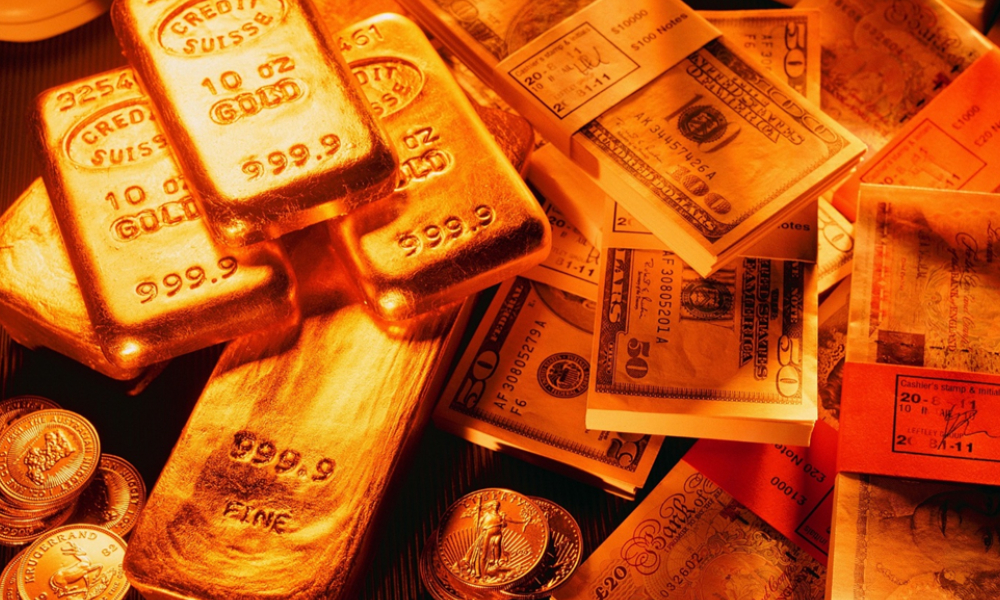
As wars, policy shocks and new tokenised assets reshape global markets, gold’s surge is being driven by geopolitics, volatility and a rapidly evolving financial landscape.
In 1991, ahead of the US-led invasion of Iraq under US President George Bush Sr., gold rose from about $373 per ounce to over $403. Once the war began, it fell roughly $10 to around $393. A similar pattern occurred in March 2003 when US President George W. Bush invaded Iraq after the 9/11 attack on the World Trade Centre. Gold climbed to about $388 from the $325-340 range before the invasion, but dropped back to around $323-325 by 20 March, the day the invasion began.
However, the pattern has shifted in recent years. When the Ukraine war began on 24 February 2022, gold was around $1,890-$1,900 per ounce. As the conflict escalated, prices climbed to about $1,950 and crossed $2,000 by early March. Many expected the war premium to fade quickly, assuming a short conflict. Instead, the war continues, pushing gold higher alongside other factors, eventually reaching an all-time high of around $5,600 per ounce on 29 January 2026.
This brings us to the latest conflict involving Iran that began on 28 February 2026, with Israel and the US attacking Iran and Iran retaliating. Gold had closed in London on 27 February 2026 at about $5,222 per ounce. As the conflict intensified, prices rose to roughly $5,400 in unofficial trading. Whether this war premium holds or rises further will depend largely on the duration of the conflict and Iran’s stance against US pressure for regime change. There is also a risk of the war widening and escalating further.
February 2026 has been a tumultuous month for gold, silver as well as the rest of the precious metals basket. After reaching all-time high levels towards the end of January 2026, with gold scaling $5,600 per ounce and silver soaring above the $120 per ounce, both the precious metals had a roller-coaster ride in February. Gold as well as silver fell sharply from their peaks. Gold sank by over $700 per ounce in just a couple of weeks slipping to around $4,860 per ounce levels, while silver went down a bottomless pit and almost wiped out all the gains made in 2026 by hovering near its end 2025 level of $71 per ounce as apparently profit booking took over. But all that didn’t last and gold, in particular, rose above $5,000 per ounce once and silver tried to get in touch with $80 per ounce again.
Then, the historic judgment by the US Supreme court on 24 February 2026, that set aside the reciprocal tariffs imposed by the US President under his powers and rendered them invalid. Not to be undone, the US President not only disagreed with the SC decision but, immediately first imposed 10% reciprocal tariff on all US imports and indicated plans to increase it to 15% the next day. In the ensuing confusion, gold ended the week in London at $5,183 per ounce on 27th February, while silver finished the week at $88.14 per ounce. Therefore, both the precious metals were poised to take advantage of the war over Iran, and surge ahead in March 2026.
Gold and cryptocurrencies are often viewed as competing assets. Bitcoin, with its technology, cross-border transfer speed, and strong US backing, is seen as a major challenger to gold’s role as a store of value and safe haven. Yet Bitcoin’s volatility, evident in 2025 and early 2026, remains a key drawback. While gold surged over 62% in 2025 and stayed close to its $5,600 peak, Bitcoin retreated from its highs.
In this backdrop, US-based Tether Gold introduced a gold-backed stablecoin, with each token backed 1:1 by physical gold from 400-ounce London Good Delivery bars stored in Swiss vaults. Investors can thus hold crypto backed by fractional ownership of gold. The tokenised commodities market has now reached about $6.1 billion, led by Tether Gold ($3.6 billion) and PAX Gold ($2.3 billion), which together account for roughly 95% of the sector.
Is tokenisation the way forward for Bitcoins and even gold? Will Tether Gold and others continue to back their Bitcoins with gold in a 1:1 ratio, in perpetuity? Or will Tether Gold use gold as a ladder to help their stablecoin gain acceptance in the marketplace and then reduce its dependence on gold and ultimately kick the ladder away and use its speed with blockchain technology to help Bitcoins become the investment of choice for investors at the expense of gold?
It is too early to draw firm conclusions. However, analysts note that Tether Gold’s stablecoins are backed by physical gold stored in Swiss vaults, which is supporting additional demand for the metal and is seen as a positive signal for gold markets.
Meanwhile, India Bullion & Jewellers Association (IBJA) held the 11th edition of its annual India International Bullion Summit (IIBS) on 27-28 February 2026, in Mumbai. Apart from the various presentations and Panel discussions was a landmark announcement: IBJA and India Gold Metaverse formed a joint venture, IBJA-IGM Benchmark Price Pvt. Ltd., to establish a transparent, tradable benchmark gold price for India. It seems to leverage the popularity and widespread acceptance of the IBJA gold price with the technology support from IGM ensuring a transparent real time gold price at pace. Thereby, providing a realistic reference spot price and strengthen pricing integrity across the bullion ecosystem.
The highlight of the event was the address by Chief Guest, parliamentarian Dr. Shashi Tharoor. In a wide-ranging speech, he outlined a roadmap for India’s gold industry to emerge as a central hub in the global precious metals trade.
Dr. Tharoor stressed the geopolitical and economic need to reform India’s gold sector, describing gold as a strategic asset in a period of global financial instability and currency volatility. He urged the trade to move beyond being a passive consumer and instead leverage its technological strengths to play a leading role in the bullion ecosystem.
Linking the recent surge in gold and silver prices to global economic pressures and strain on the US dollar, he also highlighted that nearly 95% of India’s precious metal resources remain untapped underground. Calling for a major overhaul of the country’s mining policy, which currently yields only about 1.5 tonnes of gold annually, he argued that boosting domestic production would reduce imports and strengthen national reserves. Unlocking these mineral resources, he noted, could place India among the leading global economies. The question remains whether India will seize this opportunity.
In the short term, precious metal prices, particularly gold, will largely depend on how the US-Israel conflict with Iran unfolds. Over the longer term, two dates could shape the outlook for gold and silver. The first is mid-May, when the new Federal Reserve chief is expected to take office. The second is 15 July, the deadline for the 15% tariff imposed by Trump. These developments could provide clearer direction for precious metal prices later in the year.