
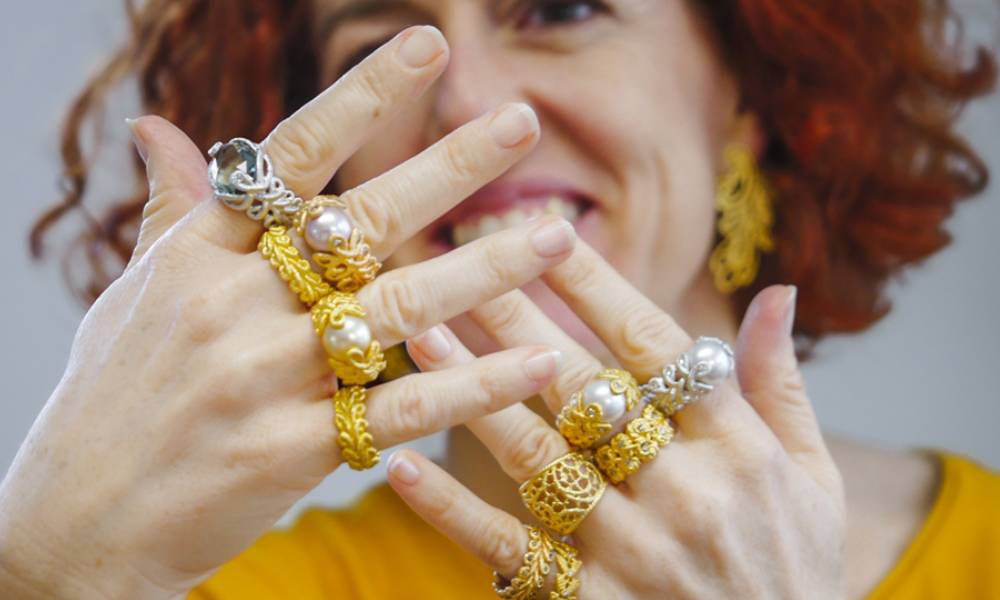
Brigitte Adolph, an independent jeweller from Germany has forged a rare design language in jewellery by transforming precious metals into forms that resemble delicate lace. Her work, developed through expert craftsmanship and a proprietary technique, stands apart in a market dominated by major luxury houses. Adolph’s lace jewellery draws on historic handwork and is recognised internationally for its intricate craftsmanship and feminine aesthetic. It is sold by jewellers and galleries across Europe, North America and Asia.
In an interview from her hometown of Weingarten in Germany, Brigitte talks about her creative journey with Shilpa Dhamija.
What reactions do you usually get when people discover your work for the first time?
People ask whether the jewellery is really metal or textile lace; this is the first reaction almost every single time. They look very closely, they touch it, and they are unsure. That moment of uncertainty and confusion is important to me because it is part of the experience. I like it when people don’t immediately understand what they are seeing. The jewellery does not look like traditional metal jewellery, and that is intentional.
Everybody is curious to know how it is made, but the technique is the foundation of the brand, and it is a secret. If that were revealed, it would lose something essential.
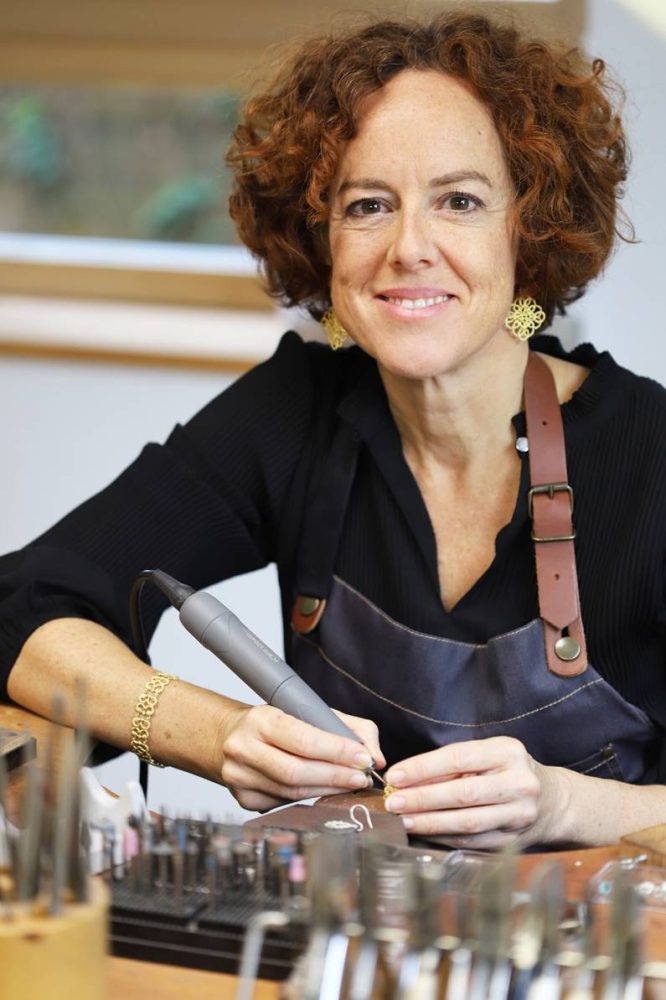
Why did you choose to become a jeweller? How did such a unique lace-design become your signature?
I come from a family of watchmakers and goldsmiths. My grandfather was a watchmaker. Both my parents are goldsmiths. Jewellery, tools, and craftsmanship were always present in my life.
My father is a master goldsmith and very strong in delicate work and engraving. Watching him work had a strong influence on me. That precision, that patience, and that respect for fine detail stayed with me. Because of that becoming a goldsmith felt very natural.
I studied goldsmithing and jewellery making in Pforzheim, then I worked in Sweden, where I learnt new techniques, greater accuracy in stone setting and discipline.
Later, I felt I needed to develop my own design language, so I studied jewellery design in Copenhagen. During this time, I began experimenting beyond classical jewellery materials.
I worked with plastics, and real textiles. My earliest pieces of lace jewellery were actually made from textile. I dyed textile lace and created earrings from it. These pieces were very feminine. Lace felt intimate, soft on the skin, and connected to tradition. I eventually wanted to translate this language into precious metal and develop a technique that could preserve every detail while still being durable.
At what point did lace move from experimentation to becoming your signature, and how did the industry respond?
While I was still studying, I continued working on the lace technique alongside other ideas. After finishing my studies, I participated in my first fair in Munich. At that time, I presented three different jewellery lines. One of them was the lace collection.
The reaction was very clear. People were far more drawn to the lace pieces than to the other lines. They stopped, asked questions, and spent time looking at those pieces. The interest was much stronger and more emotional.
For me, the decision became obvious. I realised that this was not just an experiment but something that resonated strongly with people. From that point on, I focused more on lace and it became my signature and the core of the brand.
Lace suggests fragility, yet your jewellery is meant to be worn regularly. How do materials and technique factor into this balance?
The first lace pieces were made in silver. Later, I started working in 18-karat gold. I can also produce the jewellery in platinum, although that is very difficult and technically demanding. Still, it is possible.
The pieces have to survive everyday wear, movement, and time. That balance between fragility and durability is central to my work. If the lace looks too strong, it loses its character. If it is too fragile, it cannot be worn. Achieving that equilibrium is what defines the technique.
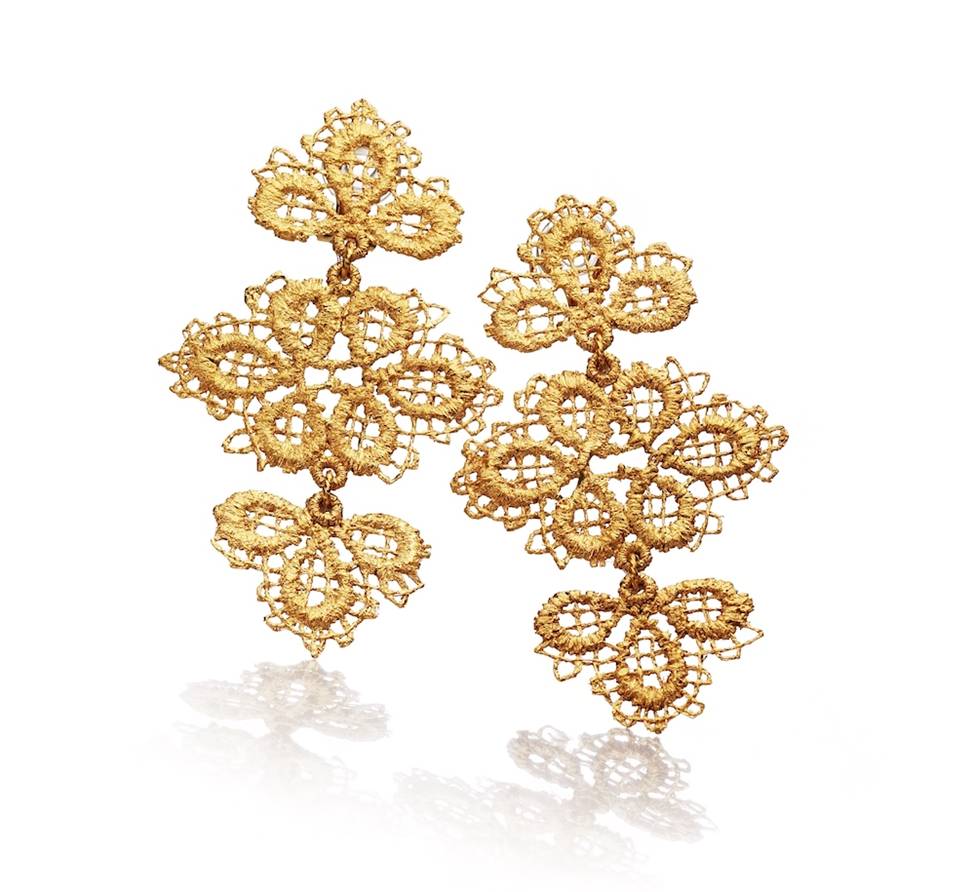
Lace traditions vary widely across cultures. What references and histories inspire your designs?
I have always been interested in textiles. When I was younger, I sewed some of my and my family’s clothes, so working with fabric felt natural to me. When I travel, I always look for lace. Every country has its own lace tradition, patterns, and techniques.
One of my trips to Venice inspired one of my collections called Venetia. Venetian lace has a very rich and ornamental character, which influenced my work strongly.
In Germany, heritage lace traditions from Plauen are quite inspiring. I studied the history and patterns there.
Nottingham in England has an important lace heritage and produced lace for Princess Diana’s wedding veil. I visited lace archives in Nottingham; seeing original sketches, books, and historic pieces was very inspiring.
India is also extremely inspiring to me. I love the opulence of Indian jewellery and how jewellery is worn, not only on the neck or hands, but across the body. My work is expressive and decorative, and in that sense, it connects very well with Indian sensibilities. I am also very inspired by Indian textiles and colour traditions and the amazing variety of laces.
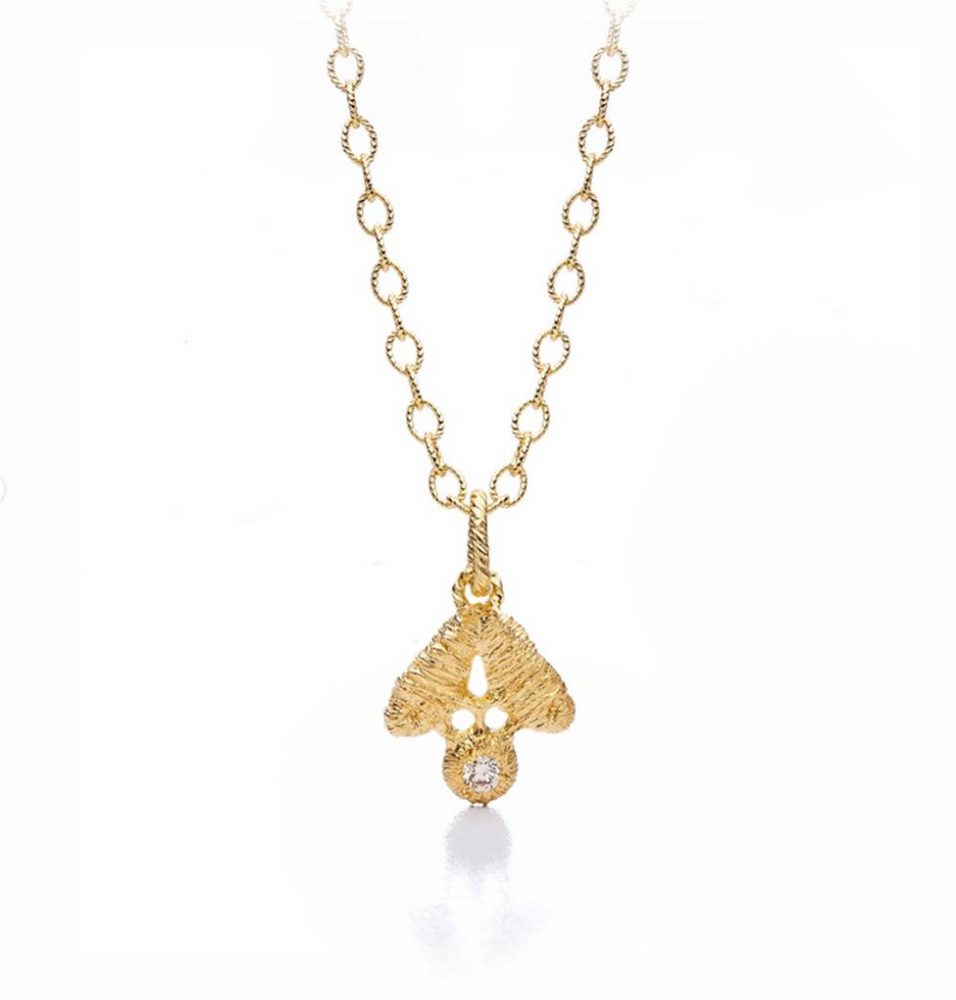
You work with recycled precious metals and sell them internationally. In your experience, how do ethics, craftsmanship, and value perception differ across markets?
Gold has long been recycled. However, today people are much more aware of the environmental and social impact of mining such as environmental destruction. In Europe, especially in Germany, many customers want reassurance that the gold they are buying is ethically sourced or is recycled.
There are now certified systems and suppliers involved that must guarantee that only recycled gold is used. That is what makes the use of recycled gold more important today.
Do people buy jewellery because it is recycled?
No. They buy it because they love the design. Recycled gold is more of a minimum standard. It is expected rather than demanded.
Consumer behaviour towards precious metal jewellery differs strongly. In Asia, people often ask how many grams a piece weighs. In Germany, craftsmanship, handwork, and small-scale production are more important. People care who made the piece and how it was made and not so much emphasis is given on the weightage of gold.
How do you plan to grow the brand?
We are still a small studio. Scalability is always a question. We currently produce between 1,000 and 2,000 pieces a year. Growth has to be careful, because the technique itself is the brand. Too much growth would risk losing control.