The post ACPL’s Sidharth Gupta on Taking Manufacturing Muscle to End Consumers with TrueSilver appeared first on Solitaire magazine is a International jewellery magazine - India’s leading B2B gem and jewellery magazine.
]]>This strategic shift marks ACPL’s transition from being a behind-the-scenes global manufacturer to building a strong, consumer-driven presence in India’s fast-evolving silver jewellery market. Leveraging its export-grade craftsmanship, large-scale manufacturing capabilities, and stringent quality certifications, the company is now bringing the same global standards directly to Indian buyers through a digital-first retail approach.
In this conversation with Solitaire International, Gupta reflects on ACPL’s journey and evolution in the international silver jewellery landscape, the business rationale behind entering the D2C space, key trends shaping domestic demand, and how the company’s export legacy is being translated into a differentiated retail proposition. He also outlines the long-term vision for TrueSilver as a significant growth driver within ACPL Exports’ broader strategy.
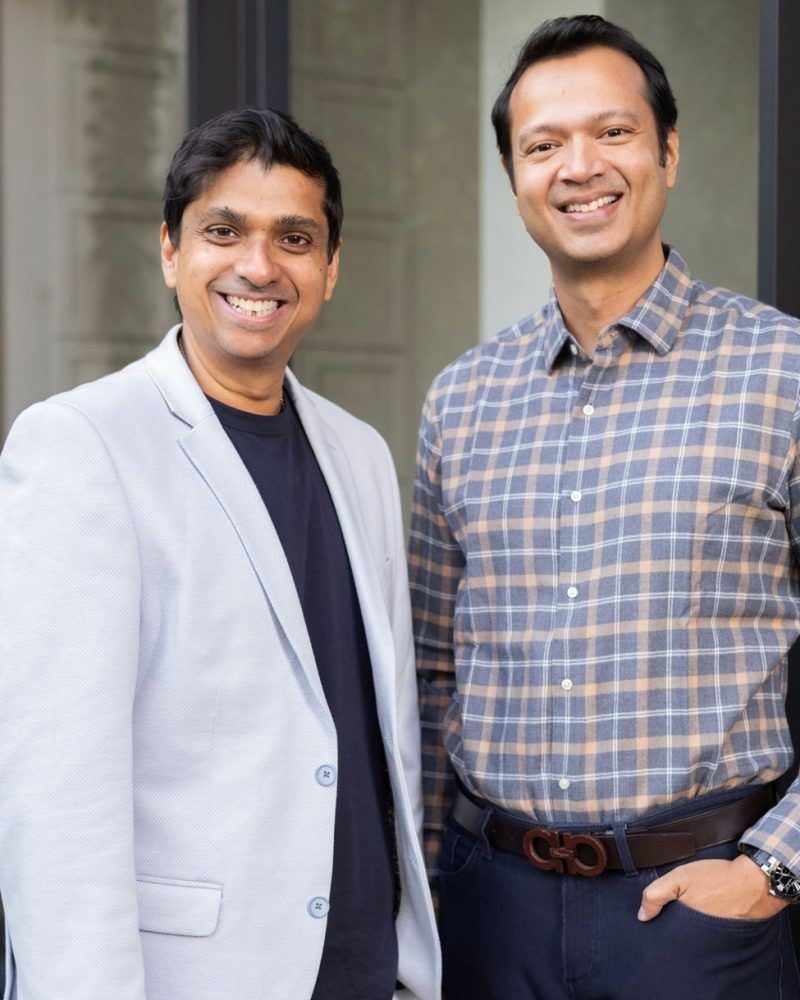
ACPL has built a solid reputation as a global manufacturing powerhouse. What consumer insights convinced you to enter the Indian D2C silver jewellery space with TrueSilver?
ACPL has been manufacturing sterling silver jewellery for over five decades and exporting globally for nearly 40 years, with strong exposure to markets such as the United States. Through this journey, we developed a deep understanding of silver jewellery trends and quality benchmarks worldwide.
In India, however, the silver jewellery market has largely remained unorganised and cottage industry driven. With rising brand awareness, aspirational buying behaviour and changing consumer preferences, we felt the category was ready to redefine itself.
We are seeing millennials and younger audiences increasingly gravitate towards silver as a preferred, contemporary option to accessorise for different occasions. These shifts collectively convinced us that it was the right time to build a consumer-facing brand in India.
You are deeply aligned with technology and digital systems. How are you leveraging AI, data analytics, or consumer behaviour tracking to shape product design, pricing, and inventory planning for TrueSilver?
At this stage, our digital focus is centered on building awareness and reaching digitally savvy consumers efficiently. We began as a pure play D2C brand because our target audience is highly active online, and digital allows better cost efficiencies in customer acquisition.
Operationally, our strength lies in being a vertically integrated manufacturing company. This gives us tighter control over production, inventory, and pricing compared to brands that source externally. Additionally, having supplied to a large number of retailers across India in our B2B business, we have strong market mapping and category insights, which help us plan inventory with precision.
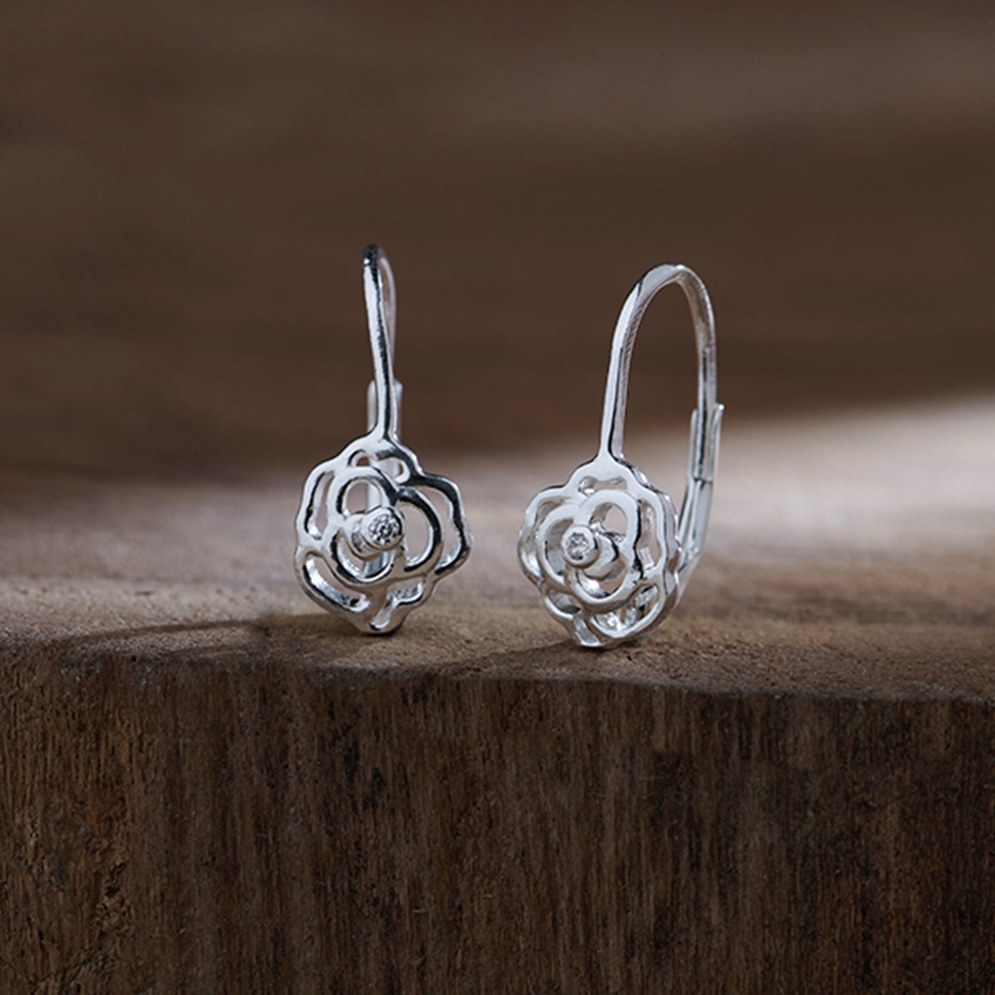
With nearly 900 SKUs at launch, will the brand employ digital tools to manage assortment planning and ensure trend responsiveness, especially for today’s consumers?
We have launched approximately 700 to 800 SKUs across categories including earrings, rings, bracelets, necklaces, anklets and toe rings. Our approach is guided by long-standing category expertise and consumer understanding built over decades.
Being vertically integrated allows us flexibility in manufacturing and faster response to demand trends. Since we control production, we can manage assortment depth and replenishment efficiently as we scale across digital and offline channels.
Tell us more about customising jewellery. Will it be a challenge to cater to such demand?
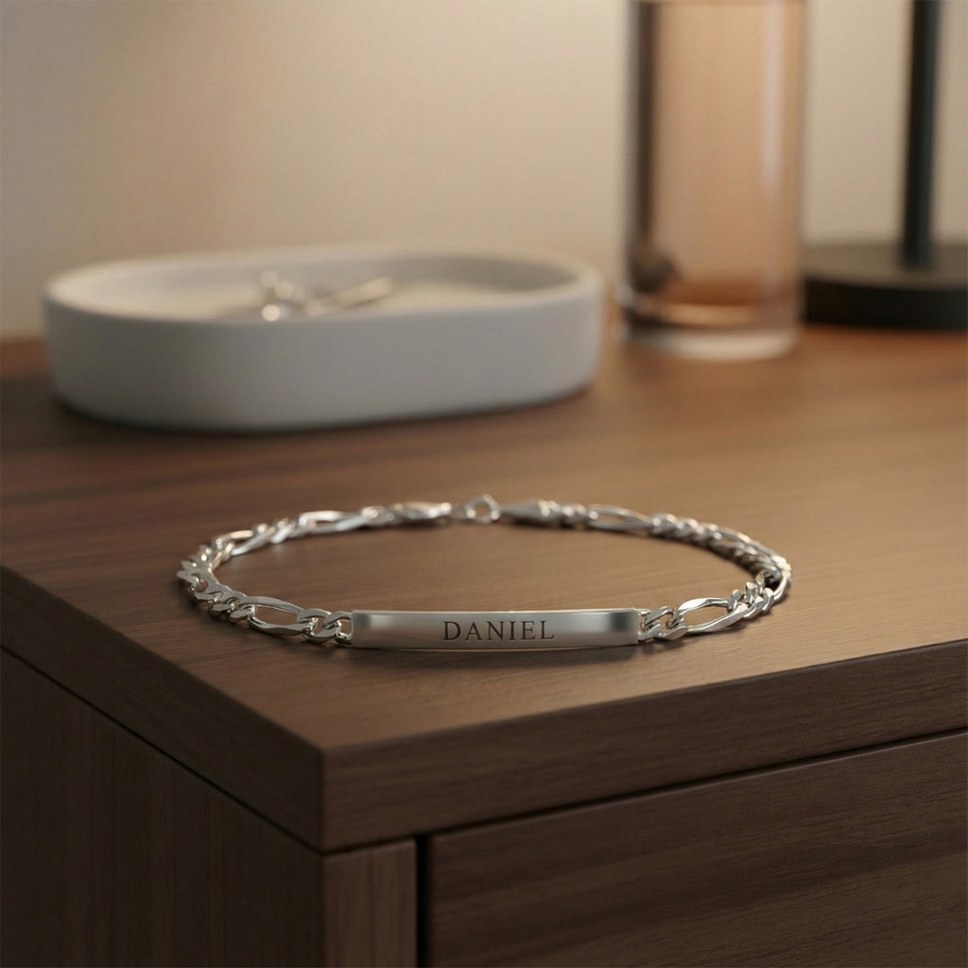
Personalisation is a huge trend in the US and Europe, and we have the largest range of personalized jewellery ranging from rings, bracelets, etc. We have about 100+ styles available on the website. Given our own strengths in manufacturing, the turnaround time for creating these pieces is faster. Styles that include initials, birthstone preferences, photographs, thumb prints, etc., are most sought after for gifting or personal purchases.
You’ve set a revenue target of ₹100 crore, scaling to ₹250 crore with 100 retail stores. How will the brand balance the evolution between your own D2C platform, marketplaces, and offline retail channels?
We have adopted a phased approach. Currently, we are digital-first, operating through our own website and key marketplaces such as Amazon and Myntra, with plans to expand across other leading platforms.
In the second phase, we plan to launch company-owned stores in metros including Delhi, Mumbai and Bengaluru.
Will TrueSilver be sold only in India or would you expand to foreign markets as well since your parent company has a strong export network across the globe?
International expansion is part of our roadmap. ACPL already works with retailers globally and has deep market understanding in the US, Europe and other regions.
For TrueSilver, we intend to begin with a digital rollout in the US, UK, and UAE markets, leveraging online channels and fulfilment partnerships. Physical retail in select international markets is under evaluation and will be considered at a later stage.
Looking ahead, do you see TrueSilver evolving into a tech-enabled omnichannel brand — perhaps integrating virtual try-ons, AR-led shopping, or blockchain-backed purity verification?
Our immediate focus is on building strong digital awareness through D2C, marketplaces and physical retail. As we scale, we remain open to integrating advanced digital tools that enhance customer confidence and experience.
Quality assurance remains central to our positioning, and as a long-standing sterling silver manufacturer adhering to global standards, we are fully compliant with BIS hallmarking norms.
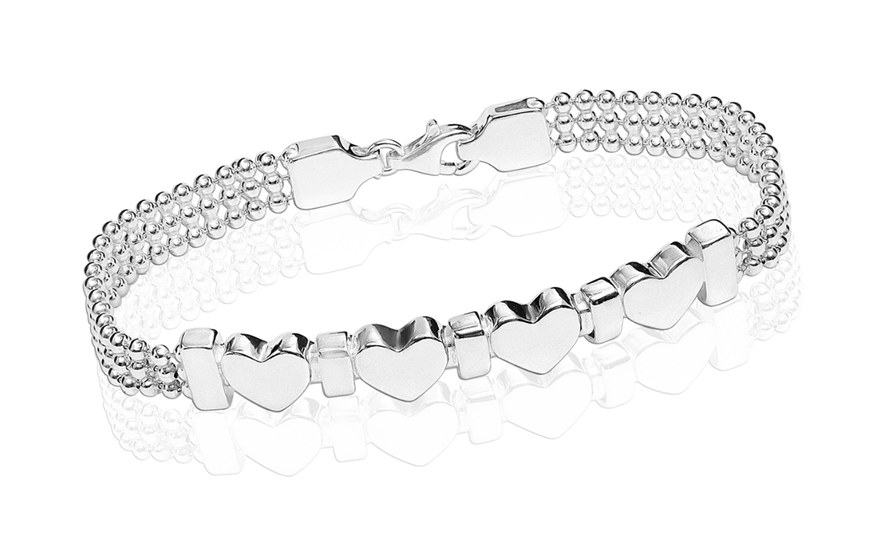
Silver in India has often been perceived as either occasion-led or price-driven. How are you proposing to reposition silver as an everyday lifestyle choice for younger consumers?
We are positioning sterling silver as modern, lightweight, and wearable for everyday use. Globally, sterling silver is widely accepted as a fashion-forward yet precious category. In India, it has traditionally been either occasion focused or unbranded.
With gold becoming significantly more expensive, consumers are looking for accessible alternatives that still offer intrinsic value. We see younger audiences adopting silver as part of everyday styling rather than waiting for special occasions. TrueSilver aims to formalise and premiumise the category through assured purity and contemporary designs.
With decades of manufacturing legacy behind ACPL, what internal cultural or operational shifts were necessary to transition from a pure B2B exporter to building a consumer-facing brand?
As a B2B exporter, our focus was largely on global standards manufacturing and retailer partnerships. Moving into a D2C model required us to build marketing, digital outreach and direct consumer engagement capabilities.
However, our strong foundation in manufacturing, category insights and retail mapping has enabled a smoother transition. Being vertically integrated allows us to control the full value chain — from product designs to production and customer delivery — which is a significant structural advantage in building a consumer brand. We are also focused on customer insights, leveraging them to our designs and brand building.
Marketplace platforms such as Amazon India and Myntra are highly competitive. What will differentiate TrueSilver in such crowded digital environments?
Our differentiation lies in assured sterling silver purity, manufacturing credibility and breadth of assortment. We offer over 900 SKUs across categories with accessible entry pricing starting at ₹1,000.
As one of the largest exporters in this category, our legacy and quality standards provide trust, while our vertically integrated structure supports competitive pricing and healthier margins compared to pure trading brands.
How do you plan to navigate silver price volatility while maintaining accessible pricing and healthy margins in the domestic market?
Silver prices, like all precious metals, are subject to volatility. However, our vertically integrated model offers greater control over cost structures. Since we manufacture in-house rather than sourcing finished goods, we have operational flexibility.
While short-term fluctuations can create instability, we are also seeing increased consumer interest in silver. Our focus remains on offering value-driven price points while managing margins through operational efficiencies.
Over time, ACPL expects its branded portfolio to contribute 30–40% of overall revenue. How will you ensure that the D2C business strengthens your established global B2B partnerships?
Our B2B export business and our D2C brand operate with distinct market strategies. The experience and global standards developed through decades of export partnerships form the backbone of TrueSilver’s credibility.
Rather than competing, the two segments complement each other. Our global exposure strengthens product understanding and quality benchmarks, while the branded play enables us to participate directly in evolving consumer trends in India.
The post ACPL’s Sidharth Gupta on Taking Manufacturing Muscle to End Consumers with TrueSilver appeared first on Solitaire magazine is a International jewellery magazine - India’s leading B2B gem and jewellery magazine.
]]>The post Carina Hardy — A Design Story Shaped By Bali appeared first on Solitaire magazine is a International jewellery magazine - India’s leading B2B gem and jewellery magazine.
]]>Drawing inspiration from “nature and the human-made world,” the founders find that Bali offers both in “an incredibly concentrated way,” shaping a design philosophy rooted in reverence, materiality and place.
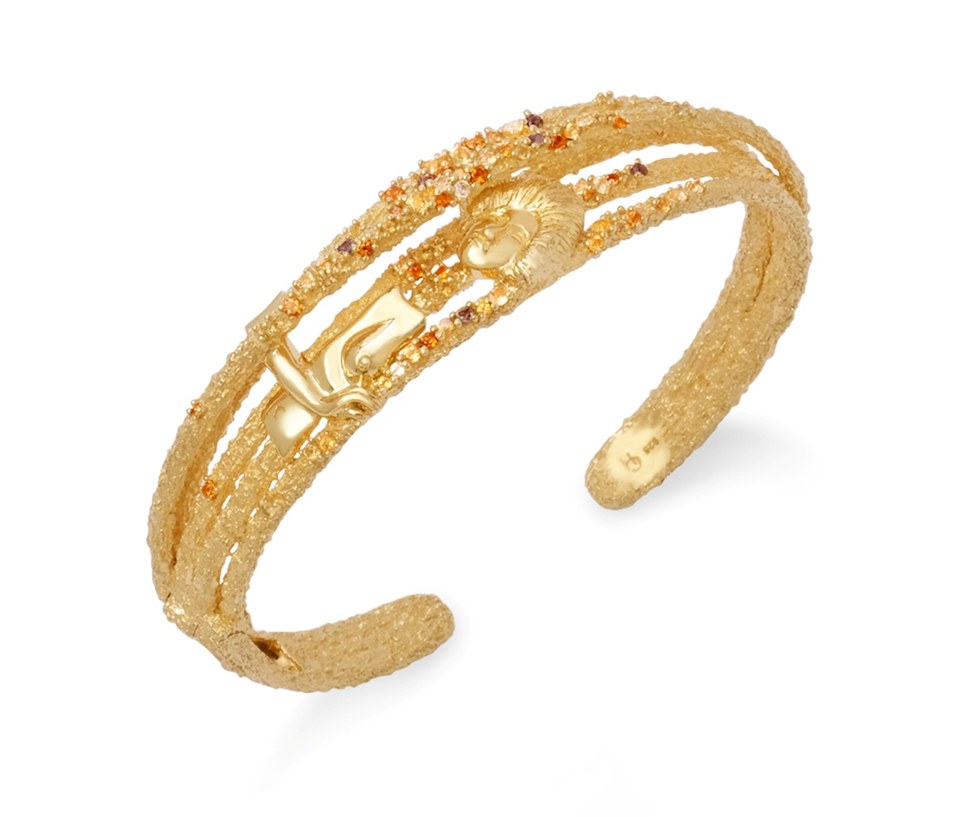
Raised between Bali and New York, the daughter of jewellery designer John Hardy and Cynthia Hardy, she grew up in a world where art, adornment and discipline were inseparable.
“In a way, they feel like two very exceptional places, and they have so much more in common than you think,” Carina reflects. What links them, she says, is creative force — the drive to make ideas tangible — and kinetic energy. Both cities are “hustle-bustle hot spots of activity for people with ideas and audacity enough to make those ideas come true.”
Though she loved making jewellery as a child, she never assumed she would enter the business, particularly after her parents sold the family brand when she was 11. Yet adornment remained instinctive. “That didn’t stop my interest in using my body as a vehicle for expression — I always loved to dress up and adorn myself.”
If Bali gave her a visceral understanding of craft, academia gave her the language to interpret it. At Barnard College in New York, Carina found herself “completely stifled by academia” until she discovered art history. There, she says, she learned “a language of seeing and critique.” It reshaped how she understood creative decisions — not simply how to make something, but why it should exist and what it communicates.
That shared visual literacy became foundational when she met Gallagher. “The first week Tavish and I met, we connected through our experience of art together,” she says. Conversations spanned visits to the Met Museum and discussions about favourite works. Both were educated in Waldorf schools, “which heavily emphasise and foster artistic and creative development.” Their co-creations, Venus and Stages, mirror their love for art history and figurative storytelling.
Carina’s understanding of jewellery extends beyond aesthetics. Growing up in Bali offered “physical, embodied knowledge about how things are made.” The reverence, imbued by Bali, defines the brand’s process.
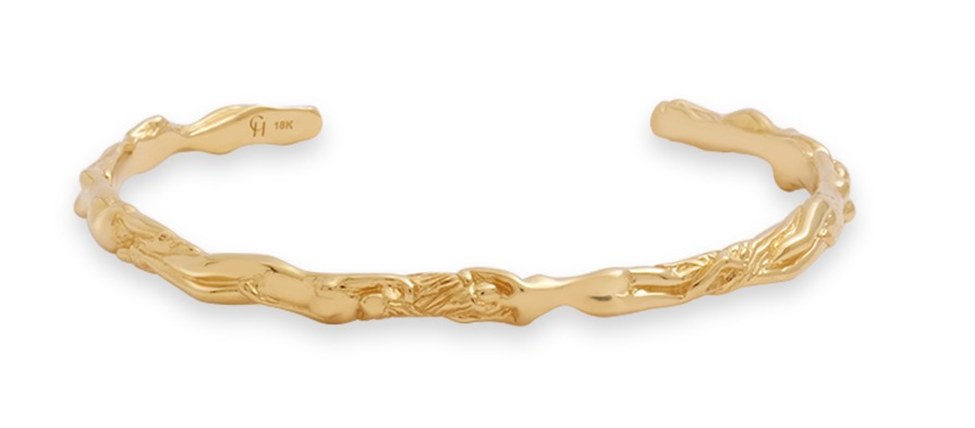
Unlike industry norms, Carina Hardy brand does not begin with sketches or CAD renderings. “We begin in wax immediately, and always in three dimensions,” she explains. Working side-by-side with their Balinese master carver, Ngurah, the trio exchange references, notes and adjustments throughout the day. Hundreds of wax forms are carved, yet “only a very small fraction — maybe one percent — will ever be cast into silver or gold.”
Designing directly in wax keeps them rooted in weight, proportion and movement. “Jewellery is three-dimensional, and so is the world we’re responding to,” she says. “We believe designing this way gives our work its sense of life. This is why our jewellery is deeply human.”
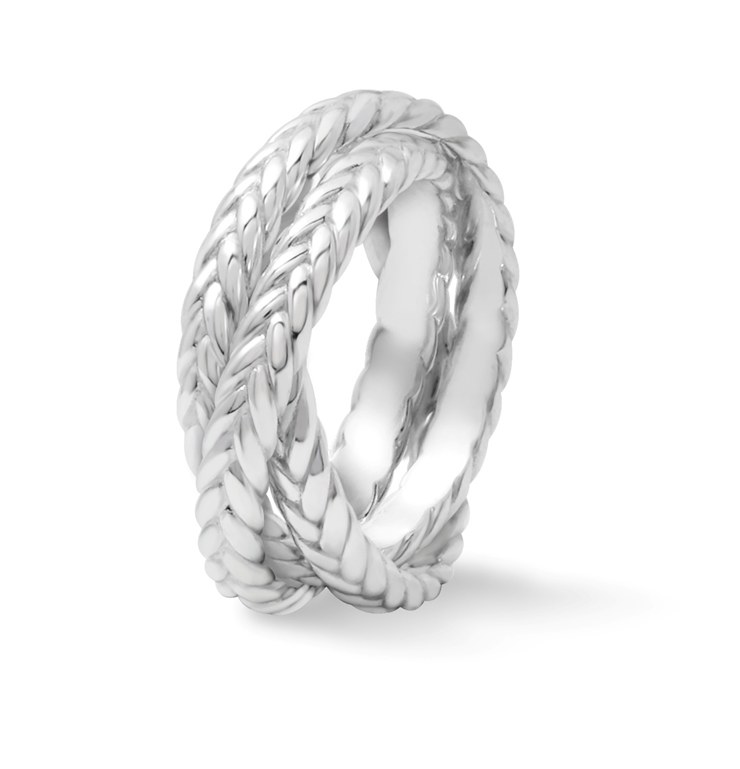
That humanity finds expression in the brand’s newest collection, Braid — a sculptural series in recycled silver exploring interwoven form as structure and symbol. The inspiration, Carina admits, is personal. “I’ve had long hair all my life, and braids are an intimate part of tending to long hair.” The idea came about during a trip to Bangkok when Gallagher wrapped her braid around his wrist. “In that moment, it just clicked — we knew we needed to make a collection inspired by the braid.”
Although early experiments in simply braiding silver “fell flat,” what fascinated the duo instead was the tension between strength and flexibility inherent in woven hair. “We didn’t want the braid pieces to feel fixed and still,” Carina adds. “We breathed life and motion into the designs by making them flexible.”
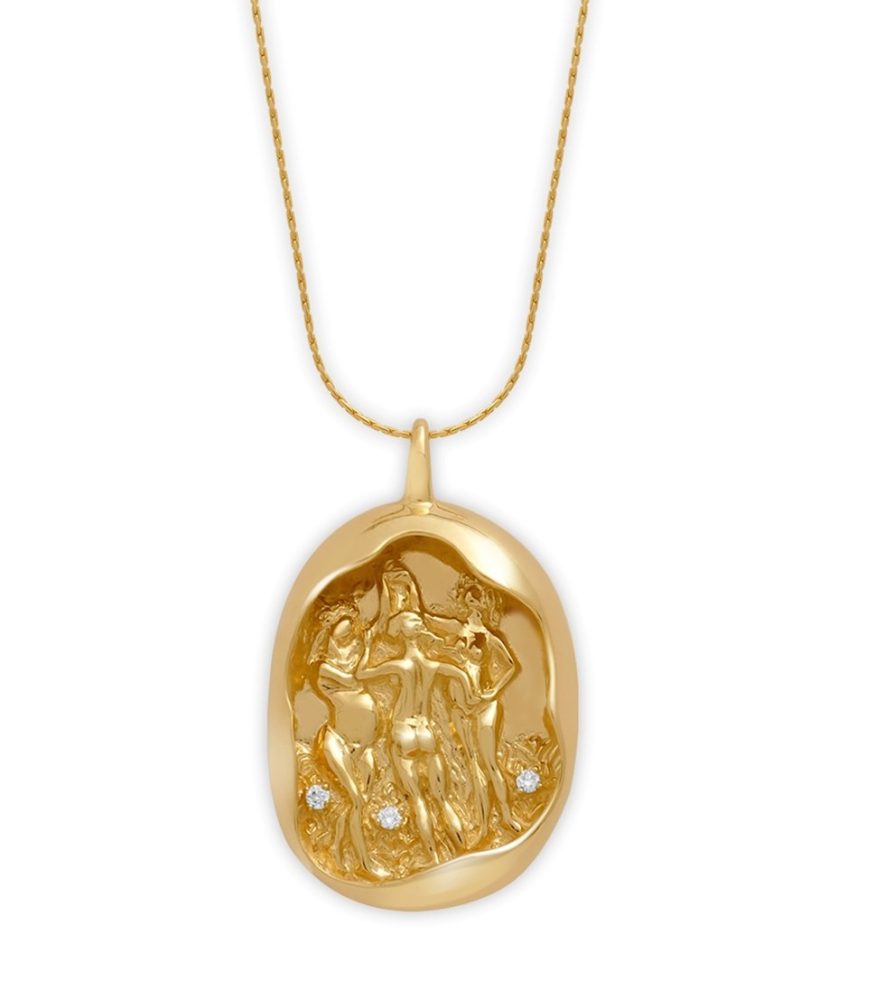
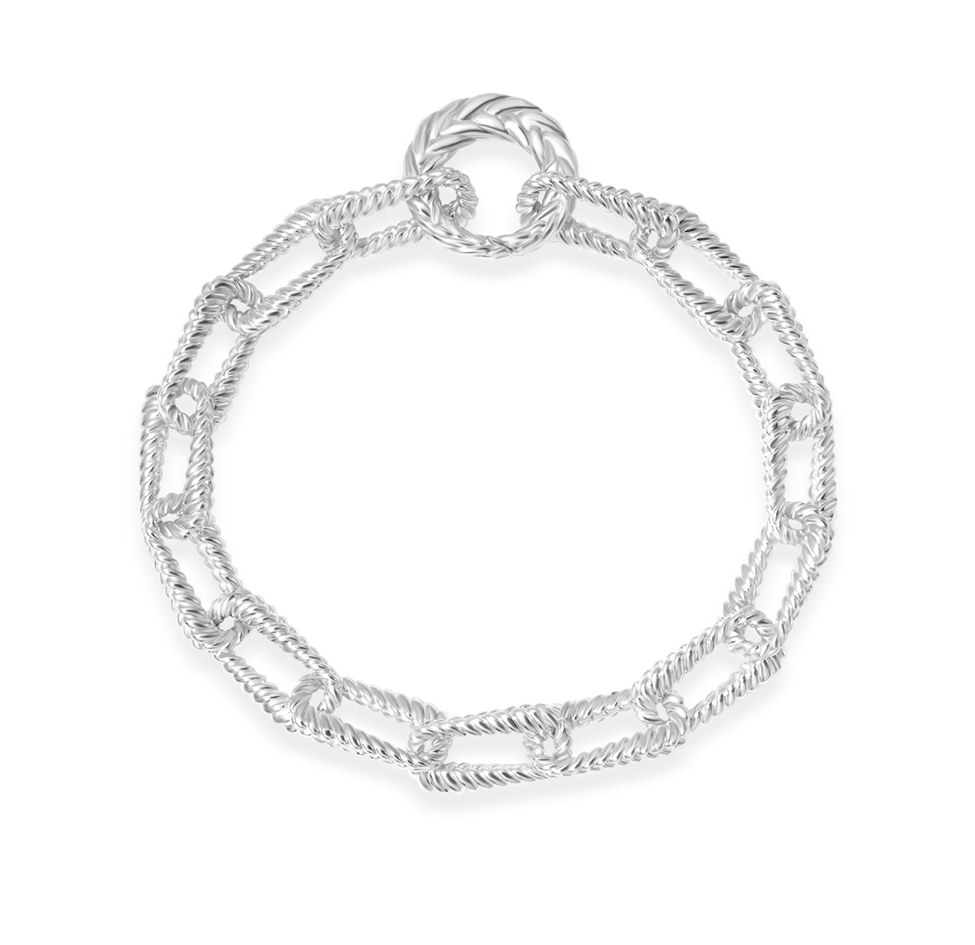
The braid is “universal — worn across cultures and centuries, by men and women alike.” Braids, she remarks, are “incredibly elegant and regal, but also deeply practical.” And it is this duality that informs their collection. Each piece in the Braid line reveals shifting dimensions from every angle: chains with braided links, supple cuffs and hoops, a rolling ring, and a “Ponytail” brooch — bringing movement and tactility to the fore. Spanning categories and priced from $150 to $1,200, the pieces nod to architectural sensibilities.
Despite their symbolism, wearability remains non-negotiable for the designers. “Jewellery becomes meaningful when it’s worn — when it’s lived in,” she says. Every piece is tested personally. Material choice reinforces the philosophy. Working exclusively with recycled metals according to Carina is “a no-brainer.” Luxury must evolve, notes the designer, whose brand employs only certified recycled gold and silver for its creations, including fine jewellery made in 18k gold. “Something truly luxurious can’t feel guilt-ridden — it has to feel good from the ground to the neck or wrist,” Carina stresses.
Sustainability is not an afterthought at Carina Hardy brand. It is embedded in their studio, materials, packaging and long-term vision. “Jewellery, after all, is meant to last generations,” remarks Carina. And we agree.
The post Carina Hardy — A Design Story Shaped By Bali appeared first on Solitaire magazine is a International jewellery magazine - India’s leading B2B gem and jewellery magazine.
]]>The post IJEX 6TH Fam Maps UAE Market Opportunities for Indian Exporters appeared first on Solitaire magazine is a International jewellery magazine - India’s leading B2B gem and jewellery magazine.
]]>The 6th batch of the IJEX FAM Programme, initiated and facilitated under GJEPC’s Export Mentorship Programme (EMP), delivered a structured five-day immersion into the UAE jewellery ecosystem, combining market intelligence, design orientation, logistics guidance, and extensive retail visits across Dubai, Abu Dhabi, and Sharjah. Participants consistently highlighted the programme’s practical value, mentorship, and clarity in building export readiness.
Day 1: Understanding the Middle East Landscape
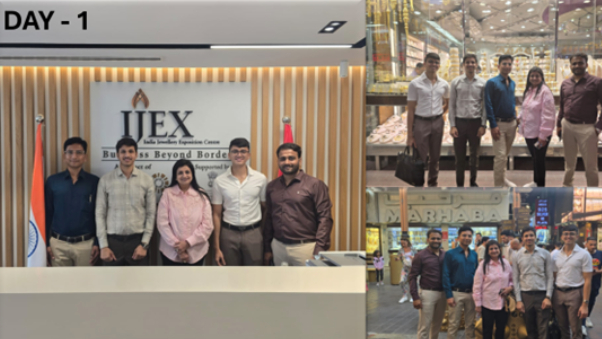
The programme commenced at IJEX with an introduction session followed by a presentation on navigating the Middle East jewellery market, covering regional dynamics, consumer preferences across emirates, export opportunities, and positioning strategies across wholesale and retail segments. Delegates then visited Ithraa Wholesale & Retail, Goldcenter Building, Gold House, Jewel Plaza, Traditional Gold Souq, African Souq, and Gold Land, together representing around 475 retailers and 460 offices, giving participants a broad view of both wholesale and traditional trading ecosystems.
Akshit Dhameliya, Grown Carbon, noted that the programme helped convert his export vision into practical reality, describing IJEX as a strong foundation for his goal of becoming an exporter.
Day 2: New Dubai Retail and Design Insights
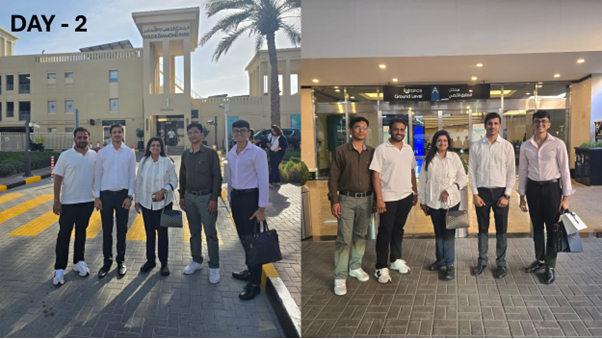
A designer interaction session focused on branding, cultural motifs, and regional aesthetics relevant to GCC consumers. Market visits to Mall of the Emirates, Lulu Hypermarket – Al Barsha, Gold & Diamond Park, and Dubai Hills Mall allowed delegates to observe nearly 115 jewellery retailers across luxury malls, diaspora-focused outlets, and specialised diamond boutiques, highlighting differences in merchandising, product mix, and customer behaviour.
Dhaval Patel, Myora Fine Jewellery, highlighted that the programme provided valuable understanding of jewellery requirements across different markets and locations, strengthening his insight into the global jewellery ecosystem.
Day 3: Logistics, Compliance and Market Diversity
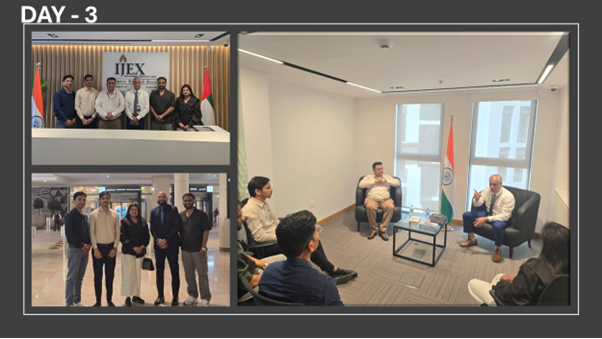
A session by Ferrari Freight Forwarders covered import procedures, documentation, duties, and secure logistics handling. Subsequent visits to Dubai Mall, Dubai Design District (d3), Karama Centre, and Meena Bazaar brought delegates in contact with about 150 retailers, spanning ultra-luxury international brands to culturally driven Indian diaspora markets, reinforcing the diversity of customer segments within the UAE.
Madhukar Ranka, Vardhman Jewels Tech Pvt. Ltd., Mumbai, described the programme as enriching and well-structured, noting that the combination of sessions and market visits created strong learning even for participants aspiring to enter international markets.
Day 4: Abu Dhabi Market Exploration
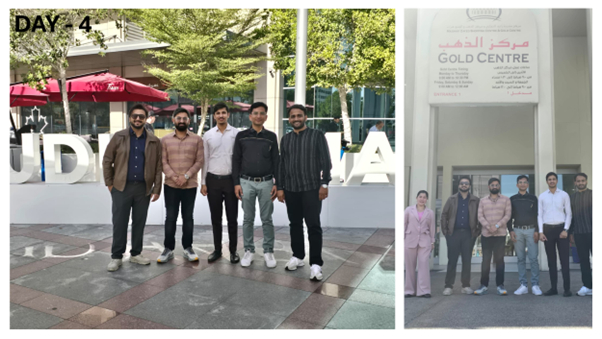
Visits to Madinat Zayed Gold Centre, Hamdan Street, and Abu Dhabi Mall covered roughly 132 jewellery stores, offering insights into the capital’s consumer preferences across luxury, traditional Arabic styles, and price-sensitive segments. Delegates reported improved clarity in identifying suitable positioning and product strategies for different emirates.
Kumarpal Jain, SSP Jewels Pvt. Ltd., emphasised that the team’s continuous support and responsiveness helped participants understand retailer networks and market opportunities, adding that he would consider establishing an office presence after gaining more experience in the region.
Day 5: Strategy Alignment and Expansion
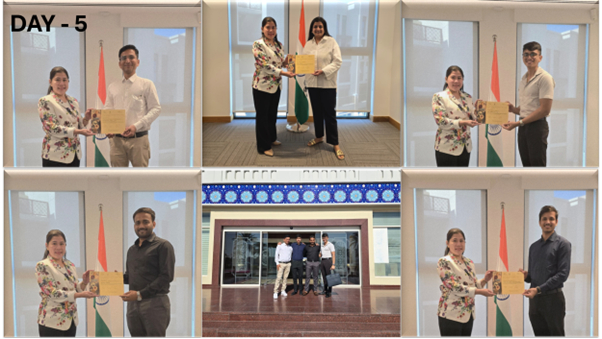
The final day focused on one-to-one consultations with the IJEX team, followed by a certificate ceremony and a visit to Sharjah Blue Souq, where delegates explored around 110 jewellery stores known for 18kt, 21kt, and 22kt gold, diamonds, and silver collections, further expanding their understanding of regional demand across the Northern Emirates.
Priyanka Jalan, Ouro Jewels, stated that the programme was thoughtfully planned and provided a clear understanding of the ecosystem while creating meaningful opportunities, appreciating the leadership and support extended by the IJEX team throughout the experience.
Overall, participants described the programme as informative, well-organised, and strongly supportive, with several stating that the experience provided clarity, confidence, and a concrete roadmap for entering export markets through IJEX.
The post IJEX 6TH Fam Maps UAE Market Opportunities for Indian Exporters appeared first on Solitaire magazine is a International jewellery magazine - India’s leading B2B gem and jewellery magazine.
]]>The post India Pavilion Highlights Masterful Craftsmanship at Prestigious Hong Kong Twin Shows appeared first on Solitaire magazine is a International jewellery magazine - India’s leading B2B gem and jewellery magazine.
]]>The Pavilion was formally inaugurated by Hon’ble Mr. Rajesh N. Naik, Consul General of India, Hong Kong, alongside Ms. Simlely Lam, Assistant Executive Director, HKTDC, and Ms. Mandy Ng, Director – Exhibitions and Digital Business.
Spanning an impressive 1,350 sq m, the India Pavilion brings together 100 exhibitors across 150 booths, showcasing a diverse and compelling range of offerings across key segments including Loose Diamonds, Lab-Grown Diamonds and Jewellery, Gemstones, Studded Jewellery, Fine Jewellery, and Silver Jewellery.
The twin shows serve as a strategic platform for India to spotlight its exceptional craftsmanship, gain insights into emerging global trends, and explore new business opportunities. With Hong Kong remaining one of India’s most significant export markets, the exhibitions play a vital role in deepening trade relationships and reinforcing India’s growing influence in the global gem and jewellery industry.
The post India Pavilion Highlights Masterful Craftsmanship at Prestigious Hong Kong Twin Shows appeared first on Solitaire magazine is a International jewellery magazine - India’s leading B2B gem and jewellery magazine.
]]>The post Sarine’s FY2025 Revenue Falls 25% to US$29.6 Million appeared first on Solitaire magazine is a International jewellery magazine - India’s leading B2B gem and jewellery magazine.
]]>India remained the company’s largest market, contributing $14.8 million (65% share) in revenue in FY2025, down 23.8% from $19.4 million in 2024, reflecting reduced polishing activity and lower throughput across the midstream segment.
The firm said FY2025 remained challenging for the natural diamond polishing sector, particularly due to LGD gaining market share in the US, where 61% of engagement rings were LGD in 2025, along with subdued consumer sentiment in China. Lower volumes of natural diamonds moving through the value chain led to weaker capital equipment sales and Galaxy-related scanning revenues.
The post Sarine’s FY2025 Revenue Falls 25% to US$29.6 Million appeared first on Solitaire magazine is a International jewellery magazine - India’s leading B2B gem and jewellery magazine.
]]>The post Indian Jewellers Expand Horizons at INHORGENTA 2026 appeared first on Solitaire magazine is a International jewellery magazine - India’s leading B2B gem and jewellery magazine.
]]>The first impression as you walk into the INHORGENTA trade show in Munich is of sleek, professional presentation. The registration process, the branding on the wall, the seamless security, all exude German efficiency and a sophisticated elegance. Split across six large halls at the Messe München exhibition centre, the show featured around 900 exhibitors (55% international) with 1,200 brands from 35 countries, attracting 25,000 trade visitors from 95 countries.
INHORGENTA is one of the premier shows in Europe for precious stones, watches, fine and high jewellery, and ancillary products and services.
The show’s theme was ‘Craftsmanship’, with visitors experiencing gemstone setting, engraving, watch assembly, along with a special showcase of exceptional jewellery artists showing their craft.
Panel discussions and talks were held in hall B2 under Trendfactory, which covered a plethora of topics ranging from responsible sourcing, artificial intelligence, design, branding, marketing, gemstone mining, and author talks and presentations, which saw me present colourful insights from my book, No Stone Unturned: The Hunt For African Gems. Dr. Laurent Cartier from SSEF was one of the featured curators for the talks and moderated many of the panel discussions related to precious stones.
The upheaval caused by imposing high import tariffs by the US government, geo-political tensions worldwide, and an economic downturn in China is motivating stakeholders in the Indian gem and jewellery trade to expand their client base, which has led to many first-time participants at the INHORGENTA show from India, under the GJEPC banner and as independents.
“This year, we are proud to have nine Indian companies exhibiting under the GJEPC banner at INHORGENTA,” shared a senior representative of GJEPC. “Shows like these are gateways for Indian manufacturers and exporters to connect with European and global buyers, forging meaningful B2B partnerships.
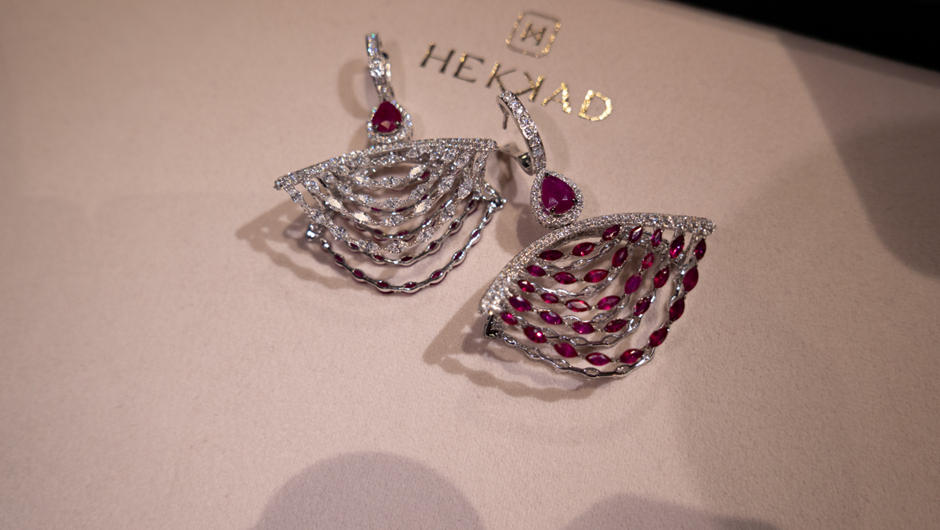
With the India-EU FTA on the horizon, the Council expects significant tariff reductions. Historically, Indian jewellery faced duties of around 4% or more in EU markets. Once these are reduced or eliminated, Indian gems and jewellery become even more price-competitive in Europe. This preferential access has the potential to boost export volumes, strengthen market share, and elevate the reach of Indian designs and brands across EU countries, a core priority for GJEPC.
Voices From The India Pavilion
For the last 35 years, Param Export has specialised in making natural diamonds inspired by antique facet-patterns and forms such as step, rose and old cuts alongside fancy shapes. “These diamonds are very popular in the market right now,” explains Hardik Donda, who is a partner in the business. “We are taking part for the first time at the INHORGENTA show with a view to expanding our footprint in Europe. We already have a few clients in Switzerland and Germany, and we want to build further on this foundation.”
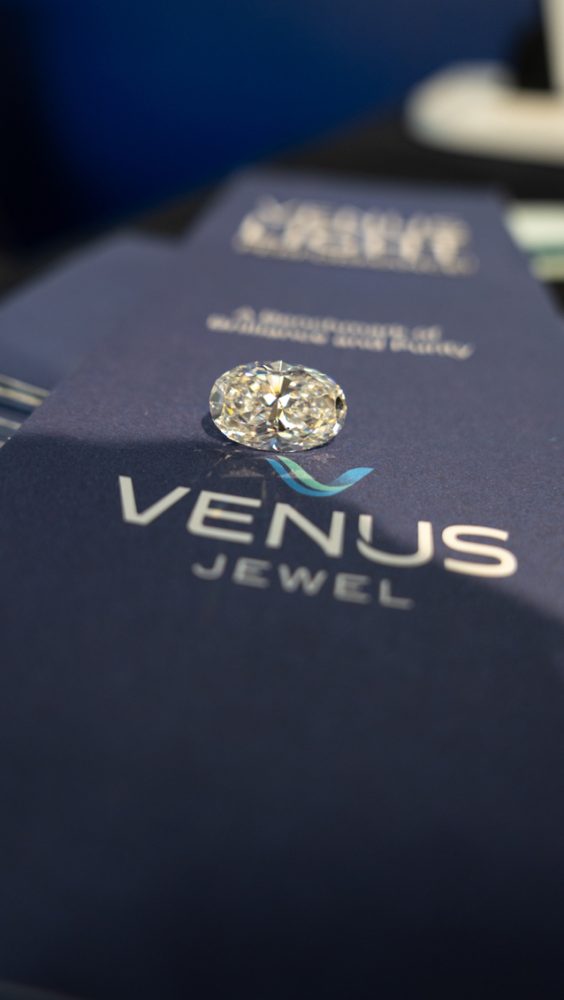
Venus Jewel is a large-scale player in the diamond industry, specialising in modern diamond cuts and fancy shapes. “Both the US and Europe have distinct mindsets, cultures, and differing customer preferences,” explains Janam Shah from Venus Jewels. “In Europe, if you are not a familiar face, customers are unlikely to approach you first. The product demands of European clients don’t directly reach India because they are routed via companies based in Antwerp that understand the European market and provide local services. Our company has been established for 55 years, and over time we have built multiple customer relationships in Europe, including Antwerp. We are at INHORGENTA to support our current clients in the region and to build new relationships.”
For decades, India has been respected as a formidable B2B manufacturing powerhouse. But history shows that nations conditioned to serve global retailers often find it harder to cultivate internationally resonant, customer-facing brands with a distinctive design voice.
What feels different today is not a shift away from B2B (which remains vital and world-class) but an expansion of identity. India is no longer only the engine behind other people’s brands; it is confidently building its own. Designers and jewellery houses from India are stepping onto the global stage with clarity of aesthetic, narrative depth and manufacturing excellence to match. This period of evolution can only be described as a golden age of jewellery design and craftsmanship.
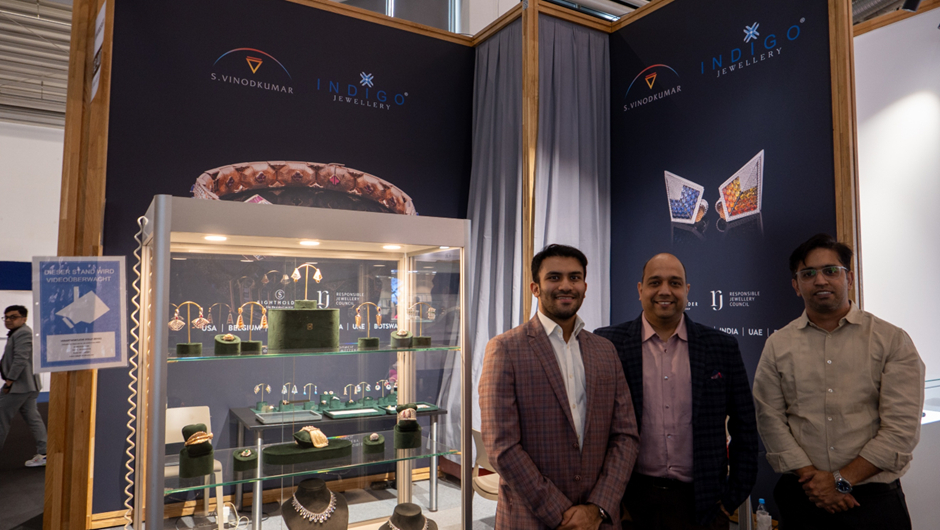
Sanjay Garg of Indigo Jewellery brought their latest premier jewellery collection to INHORGENTA. He shared: “Our company started over five decades ago as diamantaires. Today we cut and polish diamonds in Surat and Botswana and have sales offices in New York, Dubai, Hong Kong, and Antwerp. In 1999, we began making jewellery in Mumbai and today produce over a thousand jewellery pieces per day. But we saw a gap in the high-end jewellery segment. Our experience and understanding of the quality expectations of international clients led us to develop a premium jewellery line. To be honest, we were not sure how our jewellery would be received at the show, but we are happy with the positive feedback. It’s our first-time, and we are encouraged by the reaction of the market to our work.”
The Diamond Group
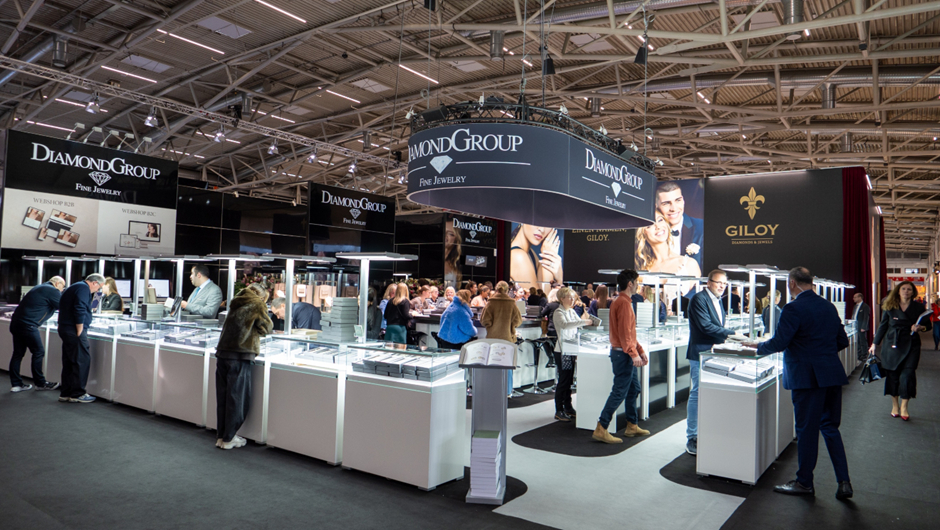
Beyond India, a notable pavilion was that of The Diamond Group, which was full of retailers sourcing natural diamond fine jewellery until the show closed.
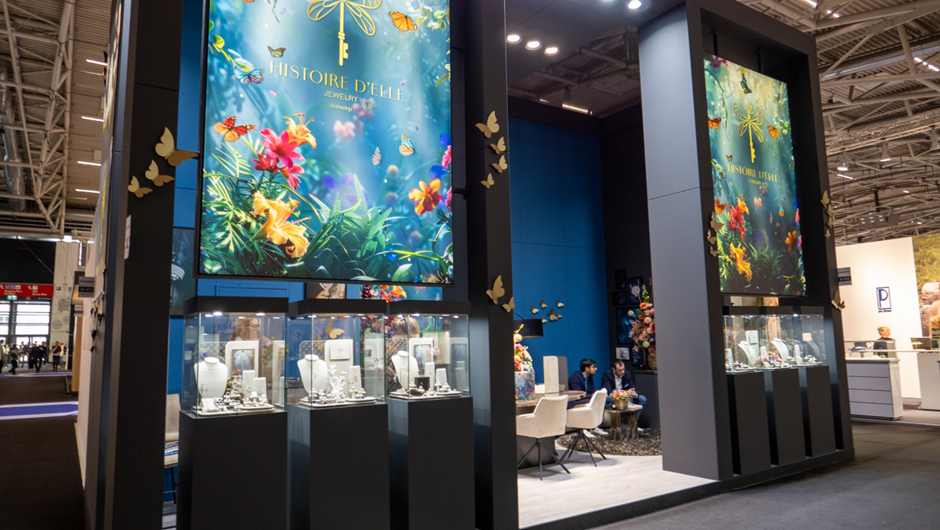
One of the most colourful stands belonged to the jewellery brand Histoire d’Elle Jewelry. “We find the INHORGENTA show more professional than some of the other shows in Europe,” shares Pascale Van Maele, the founder, and creative force behind the brand. “The quality of visitors is of a higher level, more serious in our experience, many from Germany and neighbouring countries, not so many from England, which we see at other shows. But we met international buyers from North America. In our experience, German retailers prefer to remain with the same suppliers, but we hope that changes and buyers have a more mind towards different jewellery styles.”
Speaking to exhibitors, the European market for natural diamonds, gems, and jewellery is impacted by the sharp rise of gold and silver, but the industry remains positive as it seeks alternatives. Jewellery designers are turning to platinum, a trend that harks back to early 20th-century Europe. “Platinum right now is cheaper than gold while being 8 times rarer,” explains Kathrin Schoenke, Director KNS Platinum Solutions Pvt. Ltd. “In fact, it has many attributes that make it preferable over gold and silver, it is hypoallergenic, doesn’t tarnish, is extremely strong, making it ideal for gem and diamond setting. Platinum prongs are stronger and have a lower risk of cracking or breaking, and can be made finer than gold prongs (hence covering a less area of the diamond or gemstone).”
Schoenke adds, “With platinum still a small market compared to gold,” Schoenke explains, “limited domestic availability of components like chains, earring screws, omega clips, and lever backs restricts manufacturers’ creativity. The bigger concern is the lack of 950-grade platinum solders. Since solder can make up 8–10% of a piece, using low-platinum commercial solders risks compromising both the required 950 purity standard by the international market and the durability of the final jewel.”
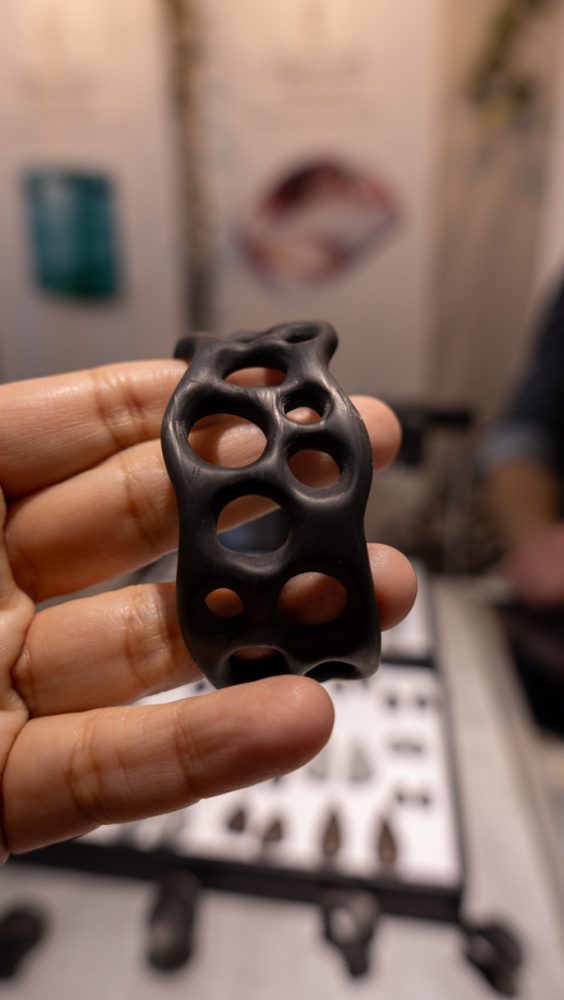
Another alternative solution to gold and silver jewellery at INHORGENTA was presented by Heinrich Gems. Combining technological innovation with craftsmanship, the company is creating bangles, earrings, and rings using epoxy-laminated carbon fibres that are lightweight but resilient, with a fibre pattern shimmering across the surface in a matt finish. The dark tones offer the perfect backdrop to allow diamonds and gems to take centre stage.
International trade shows are being held against a backdrop of uncertainty and caution. During tumultuous periods, gem, and jewellery purchases may become more considered, less impulsive, perhaps more value-led, but they don’t stop. And this is reflected in the reports from exhibitors at INHORGENTA.
The market is under tremendous pressure, but it is holding its ground, because jewels are and always will be tangible ambassadors of our emotions, how we record the passage of time and a life well loved.
The post Indian Jewellers Expand Horizons at INHORGENTA 2026 appeared first on Solitaire magazine is a International jewellery magazine - India’s leading B2B gem and jewellery magazine.
]]>The post Launch Alert: Of Cubes & Undulating Silhouettes appeared first on Solitaire magazine is a International jewellery magazine - India’s leading B2B gem and jewellery magazine.
]]>Zei Jewels’ Classy Cubica Creations
Dubai-based Zei Jewels unveils ‘Cubica’, a fine jewellery modular collection underlined by sculptural, stackable cubes that can shift as per the wish of the wearer.
Cubica is an extension of the brand’s signature concept of interchangeable plates. This time, though, the collection focuses on a cube form, introducing a fun architectural language while staying rooted in Zei’s modular DNA. Each cube is designed to be interactive, allowing the wearer to rotate, stack and reconfigure pieces through simple movements.
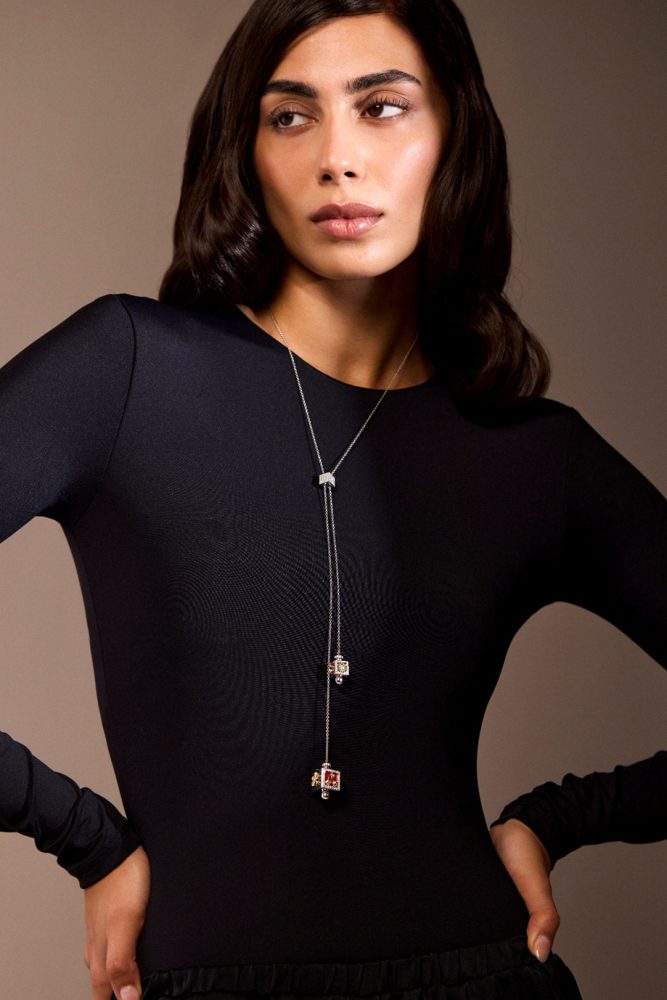
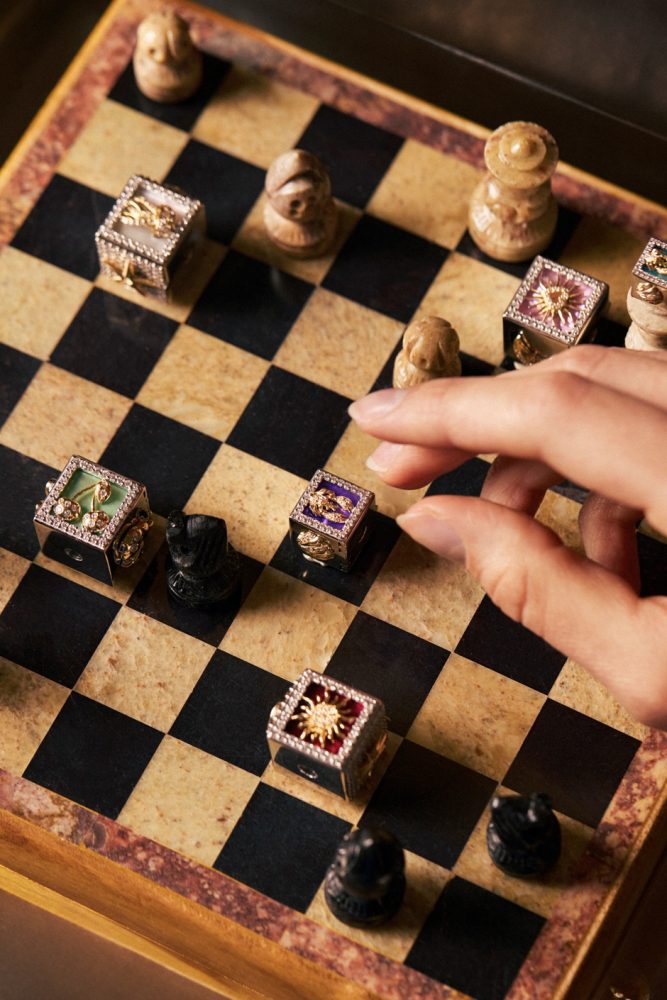
Inspired by the famous Rubik cube and the fact that a single shift or twist can instantly transform an outcome, the Cubic collection takes on the same design concept — engineered so the cubes can be unscrewed, stacked and worn in multiple configurations, offering different expressions from a single designer piece.
Each face of the cube reflects a different universe within Zei’s design world. Inspired by the sky, the Astra collection features celestial elements, while the Maris line references the sea to bring in fluid marine motifs. Floris draws cues from the forest’s organic, botanical details. The various motifs on the cubes allow the wearer to choose which story faces outwards.
The cubes are available in different sizes and can be worn individually for a minimalist statement or stacked together for a bolder expression – depending on how the wearer chooses to style them.
At its core, Cubica is guided by a philosophy of thoughtful modularity. Rather than encouraging constant change through new purchases, the collection is designed to evolve through interaction. Small, deliberate adjustments allow each piece to transform while remaining anchored in Zei’s distinctive design language.
With Cubica, Zei Jewels continues to offer designs that balance structure with play and innovation with longevity. The collection reflects a modern approach to adornment where jewellery is not fixed, but fluid, personal and shaped by the individual who wears it.
Swe Me’s Fluid Silhouettes
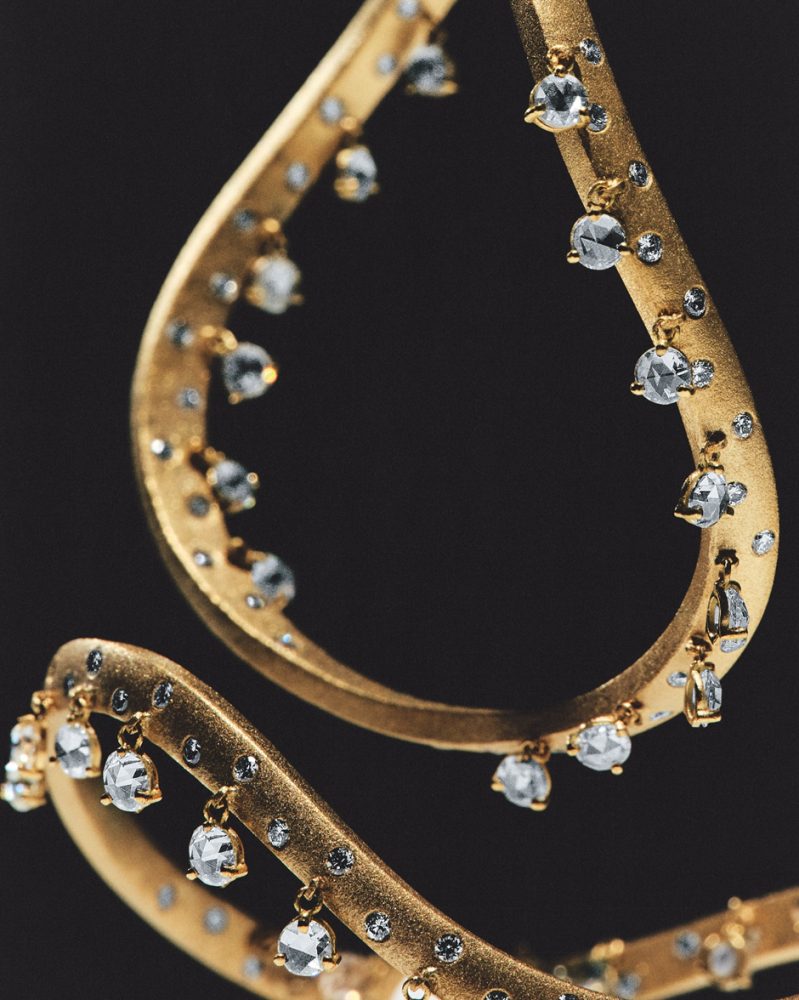
SWE ME presents an undulating collection of earrings, rings and more from its Sway collection. Founded by a British-Indian mother and daughter Sweta and Chandni Mehta, the brand is rooted in generations of diamond expertise, reimagined through a contemporary, design-led lens. “The Sway was inspired by our name, SWE ME, and the idea of movement and evolution took shape. To sway suggests fluidity, a constant shift rather than a fixed state, much like the journey women move through in life. We wanted to translate that into form, creating gold jewellery that moulds and curves with intention,” says Sweta
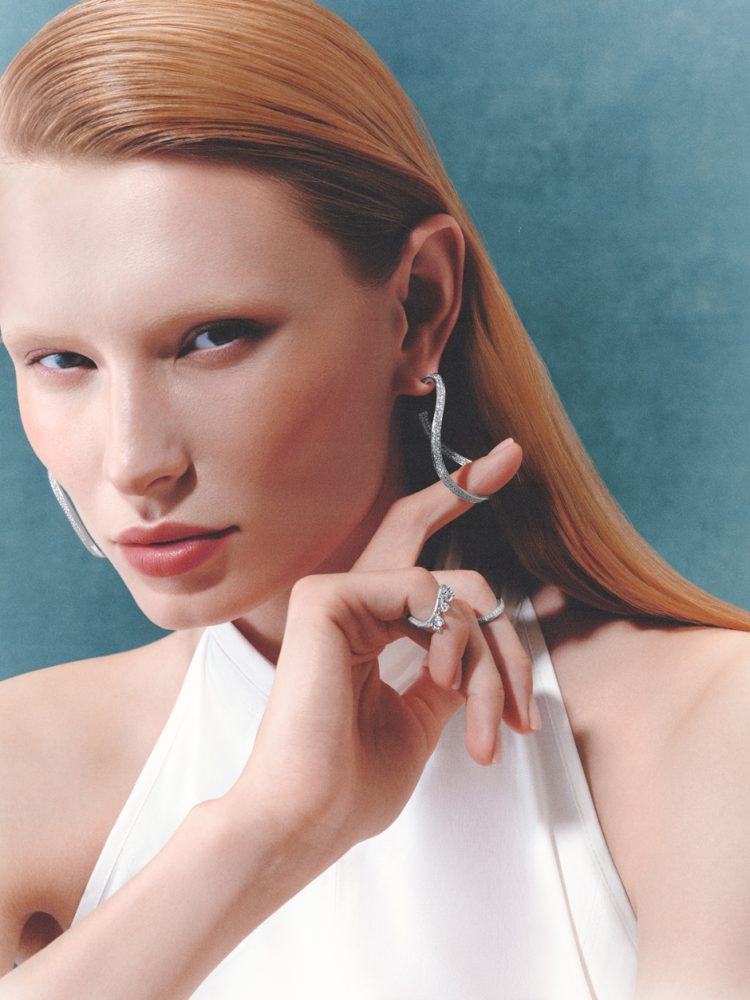
The collection developed around this balance of strength and softness. Sculpted in 18-karat yellow and white gold, each piece is designed with unique contours that sit well with the natural movement of the body. Each piece is accented with diamonds that catch the light in motion. “The Sway reflects our belief that fine jewellery should feel dynamic, considered and deeply personal,” says Sweta.
The post Launch Alert: Of Cubes & Undulating Silhouettes appeared first on Solitaire magazine is a International jewellery magazine - India’s leading B2B gem and jewellery magazine.
]]>The post Gold at Record Highs as Wars, Tariffs & Crypto Redefine the Market appeared first on Solitaire magazine is a International jewellery magazine - India’s leading B2B gem and jewellery magazine.
]]>In 1991, ahead of the US-led invasion of Iraq under US President George Bush Sr., gold rose from about $373 per ounce to over $403. Once the war began, it fell roughly $10 to around $393. A similar pattern occurred in March 2003 when US President George W. Bush invaded Iraq after the 9/11 attack on the World Trade Centre. Gold climbed to about $388 from the $325-340 range before the invasion, but dropped back to around $323-325 by 20 March, the day the invasion began.
However, the pattern has shifted in recent years. When the Ukraine war began on 24 February 2022, gold was around $1,890-$1,900 per ounce. As the conflict escalated, prices climbed to about $1,950 and crossed $2,000 by early March. Many expected the war premium to fade quickly, assuming a short conflict. Instead, the war continues, pushing gold higher alongside other factors, eventually reaching an all-time high of around $5,600 per ounce on 29 January 2026.
This brings us to the latest conflict involving Iran that began on 28 February 2026, with Israel and the US attacking Iran and Iran retaliating. Gold had closed in London on 27 February 2026 at about $5,222 per ounce. As the conflict intensified, prices rose to roughly $5,400 in unofficial trading. Whether this war premium holds or rises further will depend largely on the duration of the conflict and Iran’s stance against US pressure for regime change. There is also a risk of the war widening and escalating further.
February 2026 has been a tumultuous month for gold, silver as well as the rest of the precious metals basket. After reaching all-time high levels towards the end of January 2026, with gold scaling $5,600 per ounce and silver soaring above the $120 per ounce, both the precious metals had a roller-coaster ride in February. Gold as well as silver fell sharply from their peaks. Gold sank by over $700 per ounce in just a couple of weeks slipping to around $4,860 per ounce levels, while silver went down a bottomless pit and almost wiped out all the gains made in 2026 by hovering near its end 2025 level of $71 per ounce as apparently profit booking took over. But all that didn’t last and gold, in particular, rose above $5,000 per ounce once and silver tried to get in touch with $80 per ounce again.
Then, the historic judgment by the US Supreme court on 24 February 2026, that set aside the reciprocal tariffs imposed by the US President under his powers and rendered them invalid. Not to be undone, the US President not only disagreed with the SC decision but, immediately first imposed 10% reciprocal tariff on all US imports and indicated plans to increase it to 15% the next day. In the ensuing confusion, gold ended the week in London at $5,183 per ounce on 27th February, while silver finished the week at $88.14 per ounce. Therefore, both the precious metals were poised to take advantage of the war over Iran, and surge ahead in March 2026.
Gold and cryptocurrencies are often viewed as competing assets. Bitcoin, with its technology, cross-border transfer speed, and strong US backing, is seen as a major challenger to gold’s role as a store of value and safe haven. Yet Bitcoin’s volatility, evident in 2025 and early 2026, remains a key drawback. While gold surged over 62% in 2025 and stayed close to its $5,600 peak, Bitcoin retreated from its highs.
In this backdrop, US-based Tether Gold introduced a gold-backed stablecoin, with each token backed 1:1 by physical gold from 400-ounce London Good Delivery bars stored in Swiss vaults. Investors can thus hold crypto backed by fractional ownership of gold. The tokenised commodities market has now reached about $6.1 billion, led by Tether Gold ($3.6 billion) and PAX Gold ($2.3 billion), which together account for roughly 95% of the sector.
Is tokenisation the way forward for Bitcoins and even gold? Will Tether Gold and others continue to back their Bitcoins with gold in a 1:1 ratio, in perpetuity? Or will Tether Gold use gold as a ladder to help their stablecoin gain acceptance in the marketplace and then reduce its dependence on gold and ultimately kick the ladder away and use its speed with blockchain technology to help Bitcoins become the investment of choice for investors at the expense of gold?
It is too early to draw firm conclusions. However, analysts note that Tether Gold’s stablecoins are backed by physical gold stored in Swiss vaults, which is supporting additional demand for the metal and is seen as a positive signal for gold markets.
Meanwhile, India Bullion & Jewellers Association (IBJA) held the 11th edition of its annual India International Bullion Summit (IIBS) on 27-28 February 2026, in Mumbai. Apart from the various presentations and Panel discussions was a landmark announcement: IBJA and India Gold Metaverse formed a joint venture, IBJA-IGM Benchmark Price Pvt. Ltd., to establish a transparent, tradable benchmark gold price for India. It seems to leverage the popularity and widespread acceptance of the IBJA gold price with the technology support from IGM ensuring a transparent real time gold price at pace. Thereby, providing a realistic reference spot price and strengthen pricing integrity across the bullion ecosystem.
The highlight of the event was the address by Chief Guest, parliamentarian Dr. Shashi Tharoor. In a wide-ranging speech, he outlined a roadmap for India’s gold industry to emerge as a central hub in the global precious metals trade.
Dr. Tharoor stressed the geopolitical and economic need to reform India’s gold sector, describing gold as a strategic asset in a period of global financial instability and currency volatility. He urged the trade to move beyond being a passive consumer and instead leverage its technological strengths to play a leading role in the bullion ecosystem.
Linking the recent surge in gold and silver prices to global economic pressures and strain on the US dollar, he also highlighted that nearly 95% of India’s precious metal resources remain untapped underground. Calling for a major overhaul of the country’s mining policy, which currently yields only about 1.5 tonnes of gold annually, he argued that boosting domestic production would reduce imports and strengthen national reserves. Unlocking these mineral resources, he noted, could place India among the leading global economies. The question remains whether India will seize this opportunity.
In the short term, precious metal prices, particularly gold, will largely depend on how the US-Israel conflict with Iran unfolds. Over the longer term, two dates could shape the outlook for gold and silver. The first is mid-May, when the new Federal Reserve chief is expected to take office. The second is 15 July, the deadline for the 15% tariff imposed by Trump. These developments could provide clearer direction for precious metal prices later in the year.
The post Gold at Record Highs as Wars, Tariffs & Crypto Redefine the Market appeared first on Solitaire magazine is a International jewellery magazine - India’s leading B2B gem and jewellery magazine.
]]>The post Broken Supply Chains: Why Retail Growth Isn’t Lifting Diamonds appeared first on Solitaire magazine is a International jewellery magazine - India’s leading B2B gem and jewellery magazine.
]]>The traditional model that shaped demand across the diamond distribution chain has been fundamentally disrupted.
In the past, strong retail performance created a ripple effect throughout the pipeline. As sales rose, jewellers placed larger orders, lifting polished demand, and manufacturers responded by buying more rough to meet those needs.
The impact was exponential. A modest increase in retail sales translated into a sharper rise in polished demand and an even stronger boost in the rough market, as Pranay Narvekar, partner at Pharos Beam Consultancy, describes in what he calls the bullwhip effect.
That dynamic was most visible in the first quarter, when polished and rough trading typically spiked as jewellers replenished inventory sold during the holiday season.
The cycle is still there, but it is playing out at lower levels, even as retail jewellers continue to report steady sales growth.
In the luxury segment, Richemont reported a 6% year-on-year increase in revenue from its jewellery maisons in the fourth quarter. Kering’s jewellery houses posted an estimated 9% improvement in the same period, while LVMH’s watch and jewellery division edged up 1%.
Among more commercial players, Signet Jewelers and Brilliant Earth are due to report in March, but Birks Group already noted a 12% rise in holiday sales. In the US independent channel, data provider Tenoris estimates overall jewellery sales among speciality jewellers grew 5.6% in 2025.
The positive trend extended internationally. Hong Kong-based Chow Tai Fook reported an 18% increase in sales and Luk Fook posted 26% growth during the October to December period. In India, Titan Company’s jewellery income rose 24% for the quarter, while Australia-based Michael Hill said sales increased 3% in the second half of calendar 2025.
These companies do not represent the entire retail landscape, but they do have a growing market share and benefit from significant marketing muscle. Their results point to a clear improvement in jewellery retail, and it has been some time since growth was this broad based across so many major players.
Why has that not translated into stronger polished and rough sales?
The answer is that while overall jewellery revenue has risen, retail sales of natural diamonds have declined.
Diamonds, both natural and lab-grown, now account for roughly 41% of total jewellery sales, down from about 50% a decade ago, according to Sherry Smith, partner at the Retail Smiths, a jewellery industry advisory, in a recent podcast with National Jeweler.
Several factors contributed to the decline.
First is the steady gain in market share by lab grown diamonds, particularly in bridal. Among more than 10,000 US couples surveyed who married in 2025, 61% chose a lab-grown diamond for their engagement ring, according to The Knot’s Real Weddings Study. As more retail jewellers actively present lab-grown alongside natural, and often lead with it, a growing share of diamond unit sales is shifting away from natural goods.
Second is the resulting issue of segmentation. Lab-grown stones typically sell at a significant discount to natural equivalents. Retailers are presenting both options to align with different consumer budgets, but that has squeezed the 0.50-carat to 1.50-carat natural centre stone segment, as customers opt for larger lab-grown pieces at similar price points.
That shift has made retailers more selective in the natural diamonds they purchase. Demand has gravitated toward larger, higher value stones, narrowing the range of goods that move consistently through the pipeline and leaving mid-size categories under pressure.
Third is the effect of higher gold prices. Gold jewellery was a major driver of overall sales growth last year, particularly among Hong Kong, China and India-based jewellers. As gold has surged, it has absorbed a greater portion of the consumer’s budget within a finished piece. To maintain price points, manufacturers are adjusting designs, often reducing diamond content or using smaller accent stones. The result is fewer natural diamonds embedded in each item sold, even when overall jewellery revenue appears stable or growing.
Another factor is consolidation at retail. There are simply fewer jewellers operating today than there were a decade ago, with the number of jewellery businesses operating in the US declining by about 2% to 3% per year, according to the Jewelers Board of Trade (JBT). Even if the surviving retailers are stronger and more efficient, fewer doors naturally translate into fewer diamond orders.
At the same time, those jewellers are running leaner inventories. The lessons of the pandemic, tighter credit conditions and volatile pricing have pushed retailers to manage stock more cautiously. They are replenishing faster and buying closer to confirmed demand rather than building inventory to hold.
Taken together, these trends explain the disconnect between healthy jewellery sales and weak diamond demand upstream. The industry is not necessarily selling fewer pieces of jewellery, but it is selling fewer natural diamonds per piece, through a smaller and more cautious retail base.
The traditional multiplier effect that once lifted polished and rough when retail performed well has weakened. Growth at the counter no longer guarantees momentum in the midstream or at the mines. Until natural diamonds regain share, value and volume at the retail level, the rest of the diamond supply chain will continue to realign at lower levels. Top of Form
The post Broken Supply Chains: Why Retail Growth Isn’t Lifting Diamonds appeared first on Solitaire magazine is a International jewellery magazine - India’s leading B2B gem and jewellery magazine.
]]>The post AI Training Initiative in Kolkata Equips Jewellery Manufacturers with Future-Ready Skills appeared first on Solitaire magazine is a International jewellery magazine - India’s leading B2B gem and jewellery magazine.
]]>The programme saw participation from 22 industry professionals, who received hands-on training in AI-driven design, CAD automation, smart manufacturing processes, demand forecasting, and customer personalisation strategies. The sessions were designed to help manufacturers integrate advanced technologies into their operations and improve efficiency, responsiveness, and market competitiveness.
Certificates were presented by Chief Guest Shri Rajesh Pandey, IAS, Additional Chief Secretary, Department of MSME & Textile, Government of West Bengal, in the presence of Shri Pankaj Parekh, Regional Chairman (East), GJEPC, along with Shri Prakash Pincha and Shri Suvankar Sen, Members, Eastern Regional Committee, GJEPC.
The initiative reflects GJEPC’s continued focus on building technological capabilities within the sector and strengthening a future-ready, innovation-driven jewellery manufacturing ecosystem in the Eastern Region.
The post AI Training Initiative in Kolkata Equips Jewellery Manufacturers with Future-Ready Skills appeared first on Solitaire magazine is a International jewellery magazine - India’s leading B2B gem and jewellery magazine.
]]>